

Why Stadium Owners Should Care About Wireless IoT Growth...
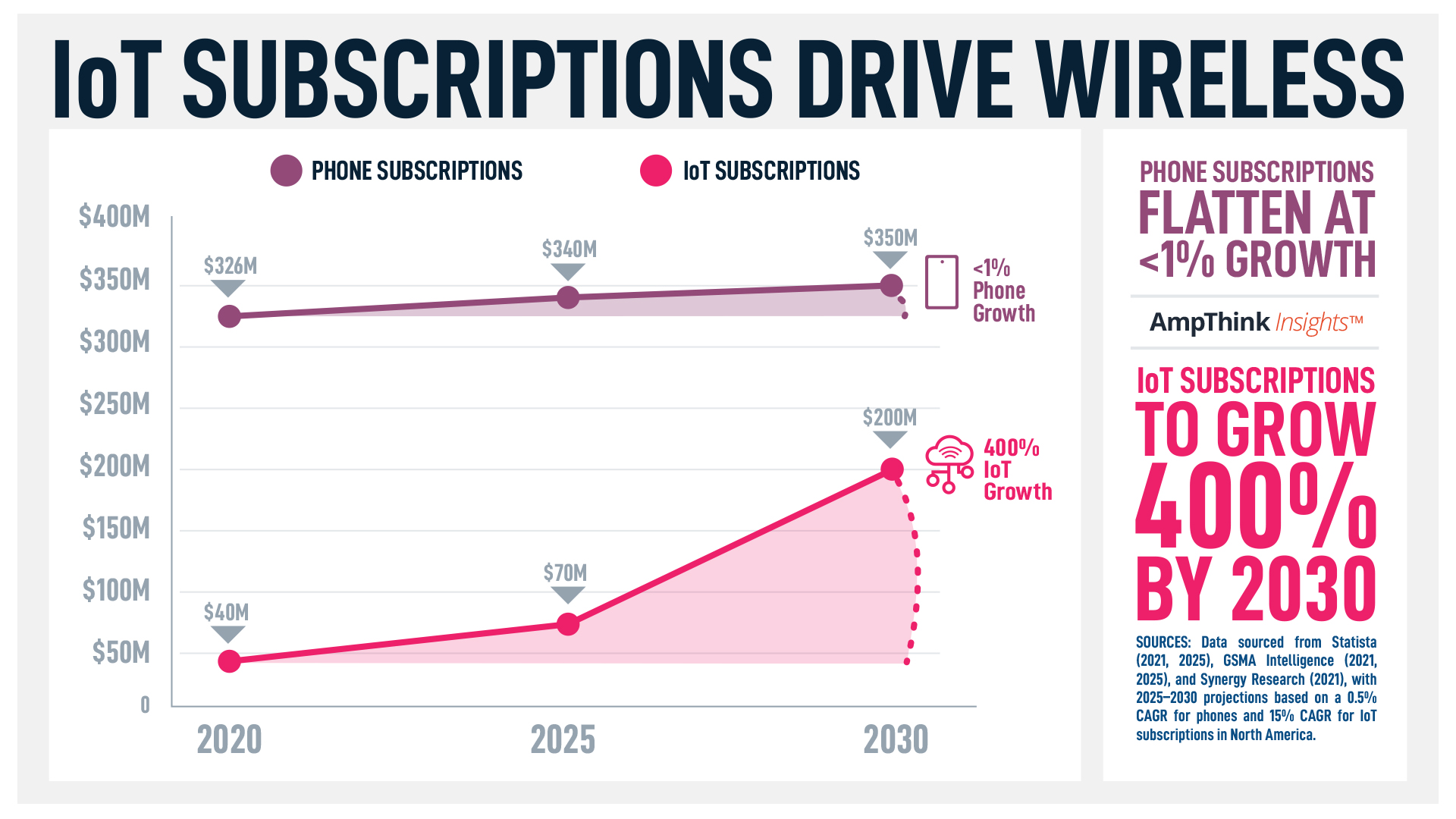
Wireless revenue from IoT subscriptions is projected to grow 400% in North America between 2020 and 2030.
- Phone subscriptions? Essentially flat.
- Carriers know this. Investors know it.
- And now, stadium owners planning DAS deployments need to know it too.
Whether you're adding DAS to an existing facility or building a new venue, it’s a critical component for fan experience and mobile commerce. But it’s also a major expense. To make the best decisions, venue owners need to understand not just the technology—but the financial motivations of carriers and third-party operators.
Here’s why that IoT growth stat matters: Carriers don’t invest in DAS just to improve fan experience. They invest where they see future revenue.
And increasingly, that means connected devices. Stadium parking spaces, ticket terminals, POS hardware, HVAC sensors, security cameras, vending machines, and digital signage aren’t just operational assets—they’re potential revenue streams for carriers through IoT subscriptions.
According to Bain & Company, U.S. telecom operators face a $28 billion free cash flow gap by 2028. To close it, they’re cutting costs and focusing on areas that support growth—especially IoT.
If your stadium isn’t part of a carrier’s revenue strategy, it may not be part of their investment plan.
- Recognize your value.
- Stadiums in major markets with high IoT density could be more attractive to carriers.
- Smaller venues in secondary markets may face tougher negotiations—especially if carriers can serve the venue from nearby towers or partner with adjacent landowners at lower cost.
- Know your options.
- Direct ownership: If you have cash you can fund DAS (CapEx) and charge carriers.
- Third-party operator (3PO): A neutral host builds DAS, carriers lease access, and you may share OpEx.
- Go without: Not really an option for any venue larger than 2,000 seats if you expect fans to have reliable wireless.
- Leverage Wi-Fi.
- Wi-Fi supports IoT, enables cellular offload, and gives you control of the network and data.
- It’s a critical part of a frequency-neutral strategy and gives you bargaining power with carriers.
- Leverage your property.
- If you own the stadium that’s one thing, but if you also own the district around it, you limit off-site alternatives for carrier towers and strengthen your position in DAS negotiations.
Bottom line:
- DAS isn’t free. Carriers need revenue to justify investing. Now, it’s about monetizing IoT—and your venue plays a central role.
- Understanding what carriers value can help you structure smarter, more strategic connectivity deals.

Garland, TX 75042


